General information; it does not replace the policy, legal advice, or professional safety instructions.
1. Make the area safe
Do not enter or remain in an area with fire, a suspected gas leak, unstable construction, contaminated water, or water near electrical equipment. Contact emergency services, the utility company, or an appropriately licensed professional when the condition calls for it.
2. Limit additional damage only when it is safe
- Stop an accessible water source only if you can do so without entering a hazardous area.
- Use reasonable temporary protection, such as a tarp or water container, without creating a new risk.
- Keep receipts, invoices, and photographs of emergency or temporary work.
- Avoid permanent repairs until the damage is documented and you understand any inspection requirements that apply.
3. Create a clear visual record
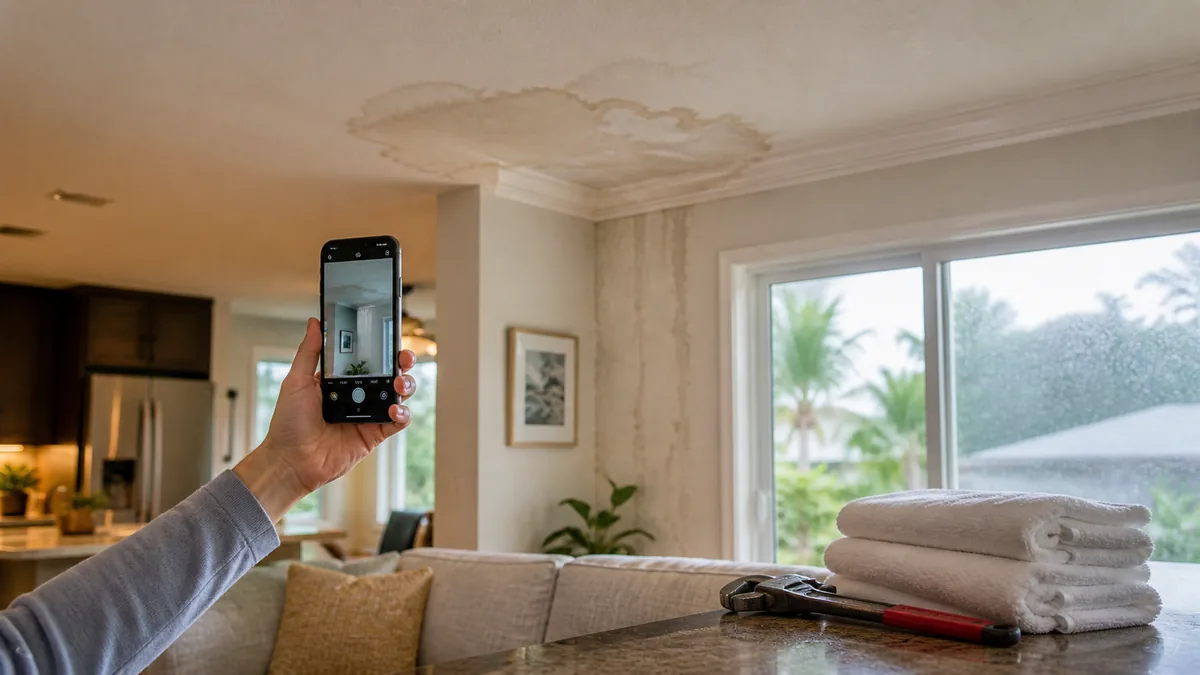
- Begin with wide photographs of the property and each affected room, then take close views of individual damage.
- Use video to show how affected areas connect, and identify the room and date in your file names or notes.
- Photograph damaged contents before moving them when safety allows.
- Preserve damaged items until the insurer has had a reasonable opportunity to inspect them, unless an item is unsafe or unsanitary to keep.
4. Follow the policy’s notice instructions
Locate the declarations, policy forms, and endorsements. Contact the insurer or agent using the reporting instructions in the policy, request a claim number, and keep proof of when and how notice was provided. A flood loss may involve a separate policy and claim process.
5. Start one claim file
- Policy and claim numbers, carrier contacts, and adjuster information
- Photographs, video, inventories, receipts, invoices, and estimates
- A short timeline of the event and actions taken
- A dated log of calls, visits, requests, and documents exchanged
6. Get the right help for the issue
A licensed public adjuster can assist a policyholder with preparing and presenting a property claim. Emergency response, repairs, engineering, environmental testing, medical care, and legal advice should come from professionals qualified in those fields.