
Published · Reviewed · M&T Adjusters
This article provides general educational information. It does not interpret any policy, provide legal or safety advice, or guarantee coverage, payment, or results. The applicable policy, endorsements, facts of the loss, and insurer process control each claim. For health, fire, electrical, structural, or contamination hazards, follow public-authority and qualified-professional instructions.
Protect people before property
Stay out of areas with fire, smoke, standing water near electricity, unstable ceilings, downed lines, gas odor, floodwater, or structural movement. Call emergency services when needed and follow access restrictions from fire, building, utility, and public-safety officials.
When access is safe, write a short factual timeline: when the damage was discovered, what occupants directly observed, emergency calls, weather conditions, and who entered. Do not guess at cause. Early notes reduce confusion after multiple inspections and conversations.
- Move people and pets away from hazards.
- Do not enter posted or restricted areas.
- Keep incident numbers and responder contact details.
- Never climb onto a wet, wind-damaged, or unstable roof.
Create a visual record before conditions change
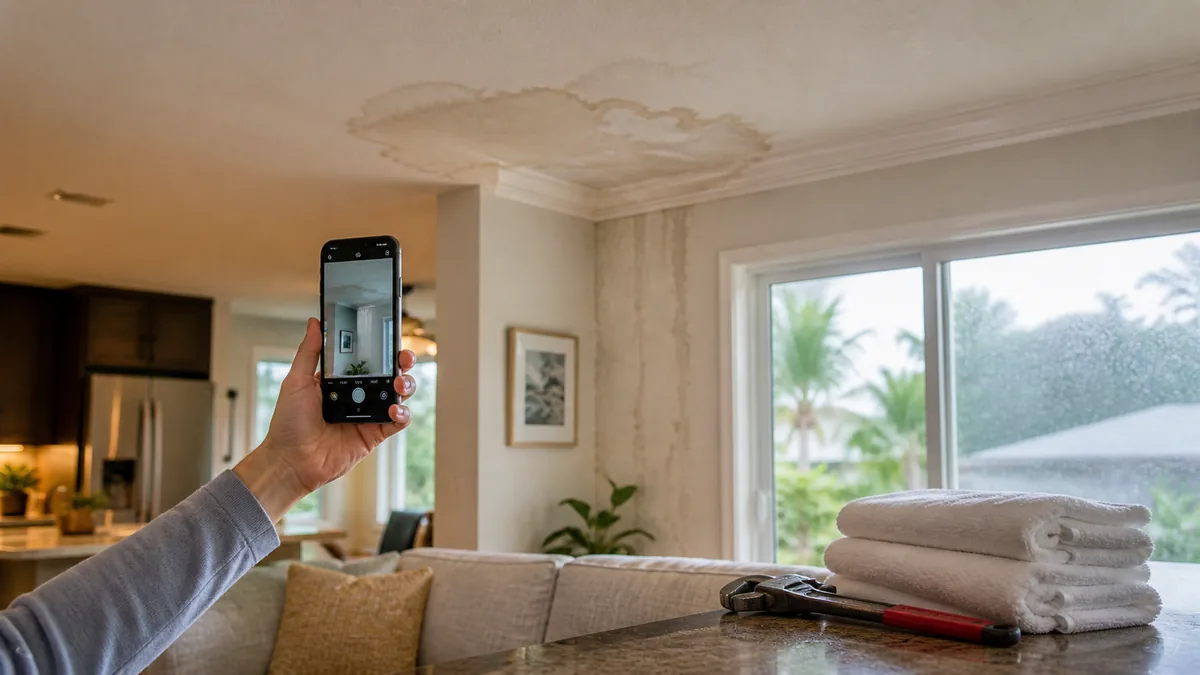
Nevada DOI advises consumers to photograph damage and preserve property for inspection when possible. Begin with exterior context, every building elevation, drainage and washes, openings, debris, and utilities. Inside, take a doorway view of each room, then medium and close photographs.
For contents, record room, item, quantity, brand, model, approximate age, condition, and proof of ownership. Save original image files and make a secure backup. If private documents appear in a photograph, create a redacted working copy while preserving the original securely.
- Use wide, medium, and close sequences.
- Show waterlines or damage dimensions with a safe scale reference.
- Record model and serial data when relevant.
- Do not publish claim, policy, identity, or banking information.
Take reasonable temporary steps and keep the evidence
The Nevada Division of Insurance tells consumers to prevent further damage, make or arrange temporary repairs, and save receipts. Examples can include closing a leaking supply, covering an opening, moving undamaged contents, boarding an unsafe opening, or arranging emergency extraction when conditions allow.
Photograph before and after the temporary work. Request an itemized authorization, measurements, vendor photographs, daily logs, invoices, and proof of payment. Do not begin elective permanent reconstruction merely because a high-pressure vendor says immediate signature is required.
- Separate emergency protection from permanent repair proposals.
- Use licensed professionals where Nevada requires a license.
- Keep tarping, board-up, drying, storage, and lodging receipts.
- Document necessary disposal before removal when safe.
Notify the insurer and organize one master file
Report the loss through the method in the policy or the insurer’s official channel. Record the time, representative, confirmation, claim number, requested documents, and assigned adjuster. Nevada DOI advises immediate reporting and keeping the policy and home inventory available.
Use one master folder for the policy, endorsements, declarations, photographs, inventory, estimates, receipts, correspondence, inspection notes, and payment explanations. Maintain a communication log and update the insurer if temporary lodging or contact information changes.
- Keep originals and send copies unless an original is required.
- Record what was submitted, how, and when.
- Ask written questions when instructions are unclear.
- Contact Nevada DOI consumer services if you need official assistance.
Frequently asked questions
Clear answers, without promises.
Should I wait for the adjuster before protecting the property?+
Do not delay urgent safety or reasonable temporary protection. Document before work when safe, notify the insurer, and preserve complete vendor and expense records.
What if authorities will not let me enter?+
Do not enter. Document from a safe location, keep the restriction or incident information, and tell the insurer that access is not yet permitted.
Does good documentation guarantee coverage?+
No. Documentation explains the facts; the policy, endorsements, exclusions, conditions, and claim investigation control coverage and payment.
Official sources
Sources used for this guide.
- Nevada Division of Insurance — What to Do When You Need to File a Claim
- Nevada Division of Insurance — How to Read Your Home Insurance Policy
- National Flood Insurance Program — How to Document Flood Damage
Last editorial review: . External pages may change.