
Published · Reviewed · M&T Adjusters
This article provides general educational information. It does not interpret any policy, provide legal or safety advice, or guarantee coverage, payment, or results. The applicable policy, endorsements, facts of the loss, and insurer process control each claim. For health, fire, electrical, structural, or contamination hazards, follow public-authority and qualified-professional instructions.
Begin with safe ground-level context
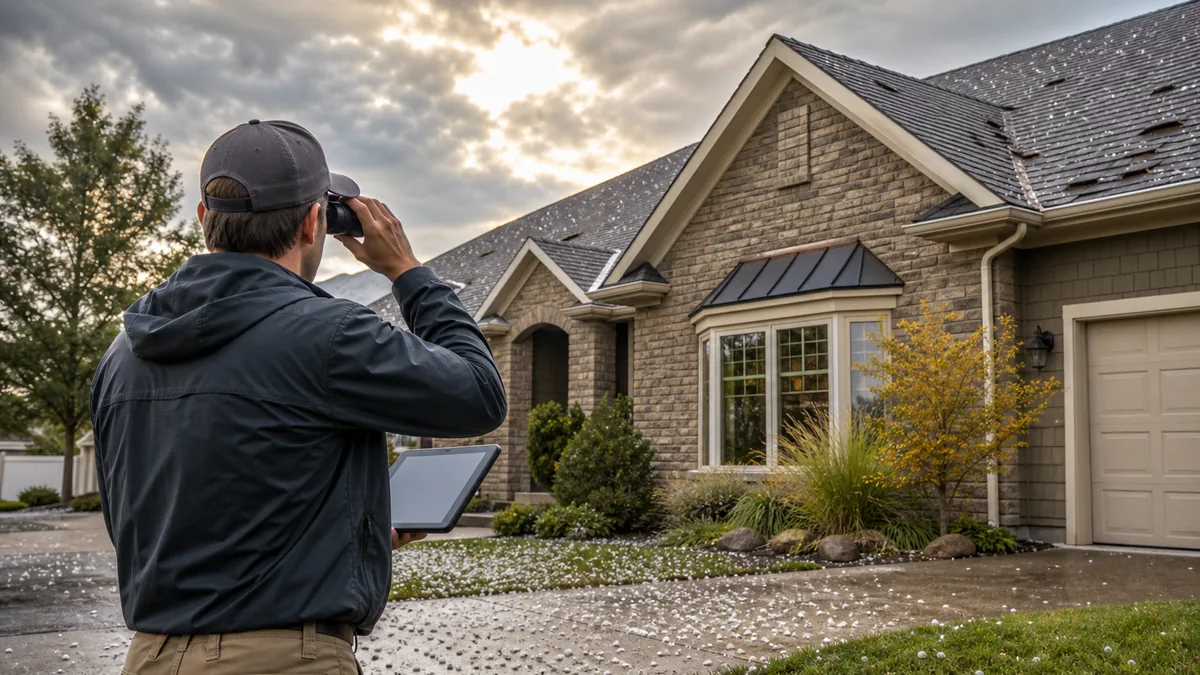
Photograph every elevation, roofline, slope visible from the ground, edge, opening, vent, gutter, screen, siding, fence, tree, and debris pattern. Nevada outflow winds can travel beyond the rain core, so record observed site conditions rather than assuming the closest rain report tells the entire story.
Do not climb onto a wet, steep, wind-damaged, or unstable roof. Use a qualified inspector when access is necessary. Record official weather information for context, but building-specific observations and analysis remain important.
- Use ground zoom or qualified aerial methods.
- Capture collateral indicators such as vents and soft metals.
- Photograph all sides, not only one slope.
- Keep pre-loss roof, permit, and maintenance records.
Trace exterior openings to resulting damage
When safe, document attic sheathing, framing, insulation, penetrations, ventilation, and visible moisture paths. In each interior room, take wide context before close stains, openings, displaced finishes, or contents effects.
For emergency tarping or board-up, preserve before-and-after photographs, protected dimensions, material description, authorization, invoice, and payment. Temporary work should be distinguishable from permanent repair.
- Map roof areas to rooms below.
- Record ceilings, walls, floors, and contents separately.
- Note changes after later weather.
- Do not remove materials only to create evidence.
Request component-specific professional reports
A useful inspection identifies slopes, elevations, materials, approximate age when known, methods, observed conditions, photograph locations, and qualifications. Ask that conclusions be tied to evidence.
Compare scopes by component, measurement, quantity, and repair method rather than only total price. If concealed damage appears during work, stop when appropriate and document before it is covered.
- Key photographs to diagrams.
- Retain product identification.
- Separate code or permit questions for qualified review.
- Keep each scope revision and explanation.
Organize the insurer’s estimate and correspondence
Compare rooms and components in your file with the insurer estimate and written decision. Track deductible, depreciation, payments, inspections, requests, and submitted records.
Ask written questions about omitted or differing items. A difference in scope is a documentation issue to analyze; it does not automatically establish coverage or improper conduct.
- Maintain a request-and-response log.
- Preserve transmission dates.
- Submit new documented conditions promptly.
- Keep original evidence unchanged.
Create a complete trail for temporary protection
Nevada sun, wind, and later storms can affect an exposed building after the initial event. When temporary protection is reasonably necessary, document the condition before work, the exact area protected, materials used, installation date, vendor, authorization, invoice, and condition afterward. Keep later inspections separate so the original observations are not confused with deterioration or work-created changes.
Ask vendors to preserve removed components when safe and appropriate, identify disposal, and provide original photographs. Emergency protection reduces further harm but does not establish that permanent replacement is covered. The actual policy, event facts, inspections, and written claim decision remain controlling.
- Use a roof or elevation sketch.
- Record every access date and attendee.
- Keep temporary and permanent proposals separate.
- Do not delay urgent safety work merely to obtain perfect photographs.
Frequently asked questions
Clear answers, without promises.
Can wind damage occur away from the heaviest rain?+
Yes, thunderstorm outflow winds can extend away from the rain core. Building-specific evidence is still necessary.
Should I inspect the roof myself?+
Not when access is wet, steep, damaged, or otherwise unsafe. Use safe views and qualified professionals.
Does hail nearby prove my roof is damaged?+
No. Weather reports provide context; the specific property and components must be inspected and documented.
Official sources
Sources used for this guide.
- National Weather Service Las Vegas — Climate and Monsoon Context
- National Weather Service — Thunderstorm Hazards and Hail
- Nevada Division of Insurance — File a Claim
Last editorial review: . External pages may change.