
Published · Reviewed · M&T Adjusters
This article provides general educational information. It does not interpret any policy, provide legal or safety advice, or guarantee coverage, payment, or results. The applicable policy, endorsements, facts of the loss, and insurer process control each claim. For health, fire, electrical, structural, or contamination hazards, follow public-authority and qualified-professional instructions.
Treat flash flooding as a life-safety event
National Weather Service information explains that Nevada flash flooding can fill normally dry washes and low areas quickly, sometimes from storms miles away. Never enter moving water, drive around barricades, or walk into a flooded structure with electrical or structural hazards. Move to higher ground when officials direct it.
After water recedes and access is authorized, record official warning times, observed rainfall and flow direction, surrounding drainage, exterior waterlines, debris, and the first visible interior waterline. Weather information provides context but does not by itself prove building-specific cause or coverage.
- Follow NWS and local emergency alerts.
- Stay away from washes, channels, and flooded roads.
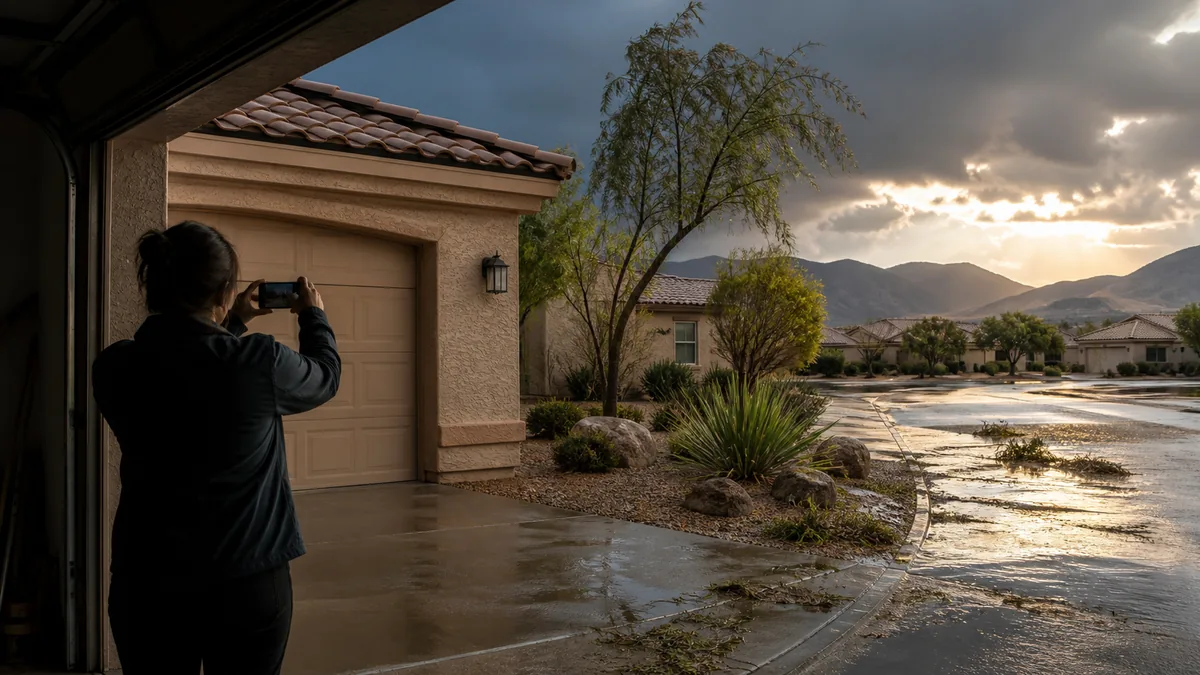
- Photograph from a safe, dry location.
- Do not restore electrical service until cleared.
Separate wind, rain, runoff, and other water pathways
Monsoon storms can create roof or wall openings, wind-driven rain, drainage overflow, surface runoff, and flash flooding in the same neighborhood. Document each observable entry point and direction instead of using “storm damage” as a single unexplained label.
NFIP guidance distinguishes flood water entering from the ground up from rain entering above, but the applicable homeowners, commercial, condominium, or flood policy controls. Notify every potentially applicable insurer promptly and keep separate claim records.
- Photograph roof, wall, door, window, and ground-level entry paths.
- Measure high-water lines safely.
- Record affected rooms and material heights.
- Keep each insurer’s correspondence in its own subfolder.
Document before cleanup while following health guidance
Take wide and close photographs of the structure, contents, mud, sediment, waterlines, and damaged systems. Record models and serial numbers. NFIP advises preserving samples of items such as flooring or curtains when appropriate after documenting, while hazardous items may require prompt disposal.
Use qualified water-remediation professionals for contamination, electrical, structural, or microbial issues. Ask for moisture maps, equipment logs, daily readings, photographs, itemized invoices, and disposal records. Safety instructions supersede evidence retention.
- Photograph items in place before moving when safe.
- Record exterior and interior waterline height.
- Separate extraction, drying, cleaning, and repair records.
- Retain receipts and proof of payment.
Review estimates by pathway and component
Compare each written estimate or decision with the rooms, materials, contents, and pathways in your file. A single storm may produce conditions considered under different policy provisions. Do not combine or relabel facts to fit an assumed result.
Ask written questions about omitted rooms, measurements, materials, deductibles, depreciation, or requested proof. A public adjuster can help document and present a claim within the licensed role, but cannot guarantee how a policy will respond.
- Use a room-by-room scope.
- Track inspections and attendees.
- Keep original evidence unchanged.
- Submit additional documented conditions promptly.
Frequently asked questions
Clear answers, without promises.
Can a monsoon storm involve more than one type of water damage?+
Yes. Wind openings, rain, drainage, surface runoff, and floodwater may require separate factual documentation and may involve different policy terms.
Should I save flood-damaged materials?+
Photograph first when safe and follow insurer and health guidance. Retain safe samples only when appropriate; dispose of health hazards as directed.
Does homeowners insurance always cover flash flooding?+
No. Standard home policies often exclude flood; separate flood insurance and specific policy terms may apply. Review the actual contracts.
Official sources
Sources used for this guide.
- National Weather Service — Flooding in Nevada
- National Weather Service Las Vegas — Climate and Monsoon Context
- NFIP — Start a Flood Insurance Claim
- Nevada Division of Insurance — Homeowners Insurance
Last editorial review: . External pages may change.