
Published · Reviewed · M&T Adjusters
This article provides general educational information. It does not interpret any policy, provide legal or safety advice, or guarantee coverage, payment, or results. The applicable policy, endorsements, facts of the loss, and insurer process control each claim. For health, fire, electrical, structural, or contamination hazards, follow public-authority and qualified-professional instructions.
Separate the setting from the measurement
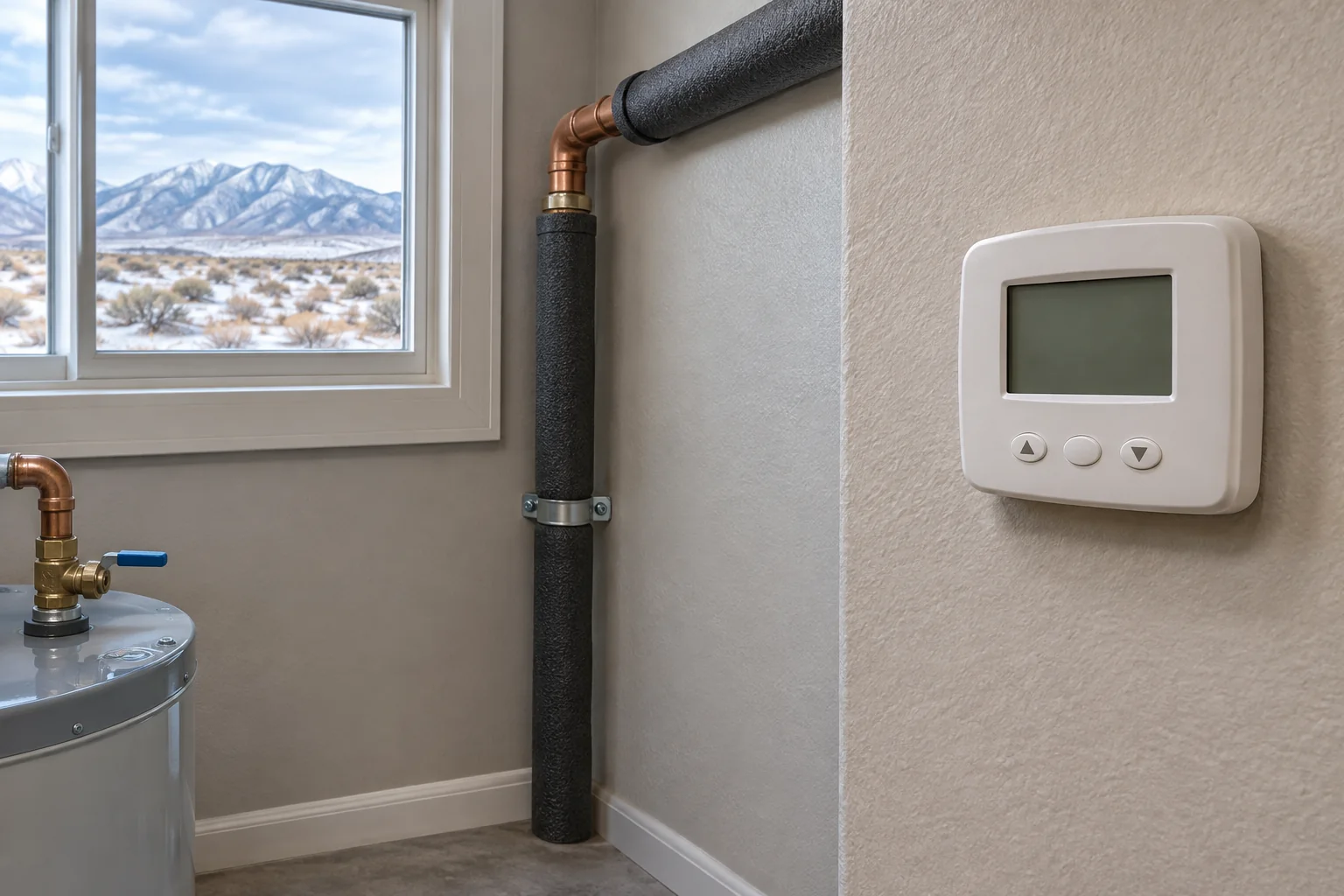
After suspected frozen-pipe damage at a Nevada home, save available heating and outage records with their dates, locations and limitations. Label a selected thermostat setting separately from a measured room temperature. Neither a single screen photo nor a regional weather report establishes the temperature inside a pipe. Do not delay reporting damage or necessary safe assistance while assembling this file.
The NAIC burst-pipe guidance linked below explains that freeze-related coverage can depend on policy requirements and steps taken to prevent freezing. Ask the insurer for the applicable wording and the records it needs. This guide offers a way to organize evidence; it does not decide whether heat was adequate or a loss is covered.
1. Preserve the original heating history
If your own thermostat or heating app provides history, save an export or dated screenshots using its normal controls. Include the displayed time range, temperature units and sensor name. Record whether a value is a target setting, an actual sensor reading or a heating-system activity indicator. Do not change settings to recreate a past screen.
A hallway sensor describes its measurement location, not necessarily a garage or concealed wall space. A heating-call indicator does not by itself establish that equipment delivered heat throughout the home. If the record stops, label the gap. Do not fill it with assumed readings or treat missing app data as proof that electricity was off.
2. Keep outage notices in their proper scope
Save utility notices you actually received and identify whether they report an estimate, a confirmed interruption or restoration. Preserve message timestamps separately from the event times stated in the notice. If the notice concerns a larger service area, label that scope rather than asserting that it proves your property lost power for the entire interval.
Place any heating-service findings alongside those notices, keeping the provider’s actual conclusions intact. Record when someone checked the property and what they directly observed. An outage notification, a technician’s finding and an owner’s recollection are different kinds of evidence; one should not silently replace another.
3. Use a short comparison instead of a reconstructed graph
Fictional example: an app shows a 60°F target at 8 p.m.; its last hallway reading is 58°F at 9 p.m.; the next available record is at 7 a.m. A utility message says restoration is expected by midnight. The file should preserve all four facts and identify the overnight data gap. It should not become a statement that every room stayed at 60°F or that power certainly returned at midnight.
A simple note can list the record, what it measures, its time interval and what remains unknown. Keep screenshots and original exports privately with the note. This is an organizing suggestion, not a required insurer form. Ask for clarification when timestamps or units differ; retain the original display.
4. Document safely and ask a precise question
Keep safely available observations of when reduced flow or leaking was first noticed, without labeling that moment as the proven time of freezing or rupture. Do not open walls or approach wet electrical equipment to obtain evidence. The American Red Cross guidance linked below warns against open-flame thawing and advises calling a licensed plumber when a frozen area cannot be located, reached or thawed.
A focused question to the insurer is: “Which policy provision and time period are you reviewing, and do these records answer your request?” Ask how to submit additional records through its designated private channel. Avoid sharing account credentials, access codes or unrelated occupancy details. Our related drying-record guide addresses the separate documentation of later mitigation. Preserve both sets without treating drying results as proof of earlier heating conditions.
Frequently asked questions
Clear answers, without promises.
Does the thermostat setting prove the pipe stayed warm?+
No. Distinguish a selected setting from a sensor measurement, and identify where the sensor was located. Neither alone establishes a concealed pipe’s temperature.
What if the app has no overnight readings?+
Preserve the available records and label the gap. Do not invent temperatures or infer a power outage solely from missing data.
Does an outage guarantee that freezing damage is covered?+
No. Ask the insurer how the policy wording and facts apply. An outage record documents only what the original notice or measurement actually supports.
Official sources
Sources used for this guide.
- NAIC — Water damage from a burst pipe
- American Red Cross — Frozen pipes
- Related: Nevada drying records
Last editorial review: . External pages may change.