
Published · Reviewed · M&T Adjusters
This article provides general educational information. It does not interpret any policy, provide legal or safety advice, or guarantee coverage, payment, or results. The applicable policy, endorsements, facts of the loss, and insurer process control each claim. For health, fire, electrical, structural, or contamination hazards, follow public-authority and qualified-professional instructions.
Give every unfinished item its own record
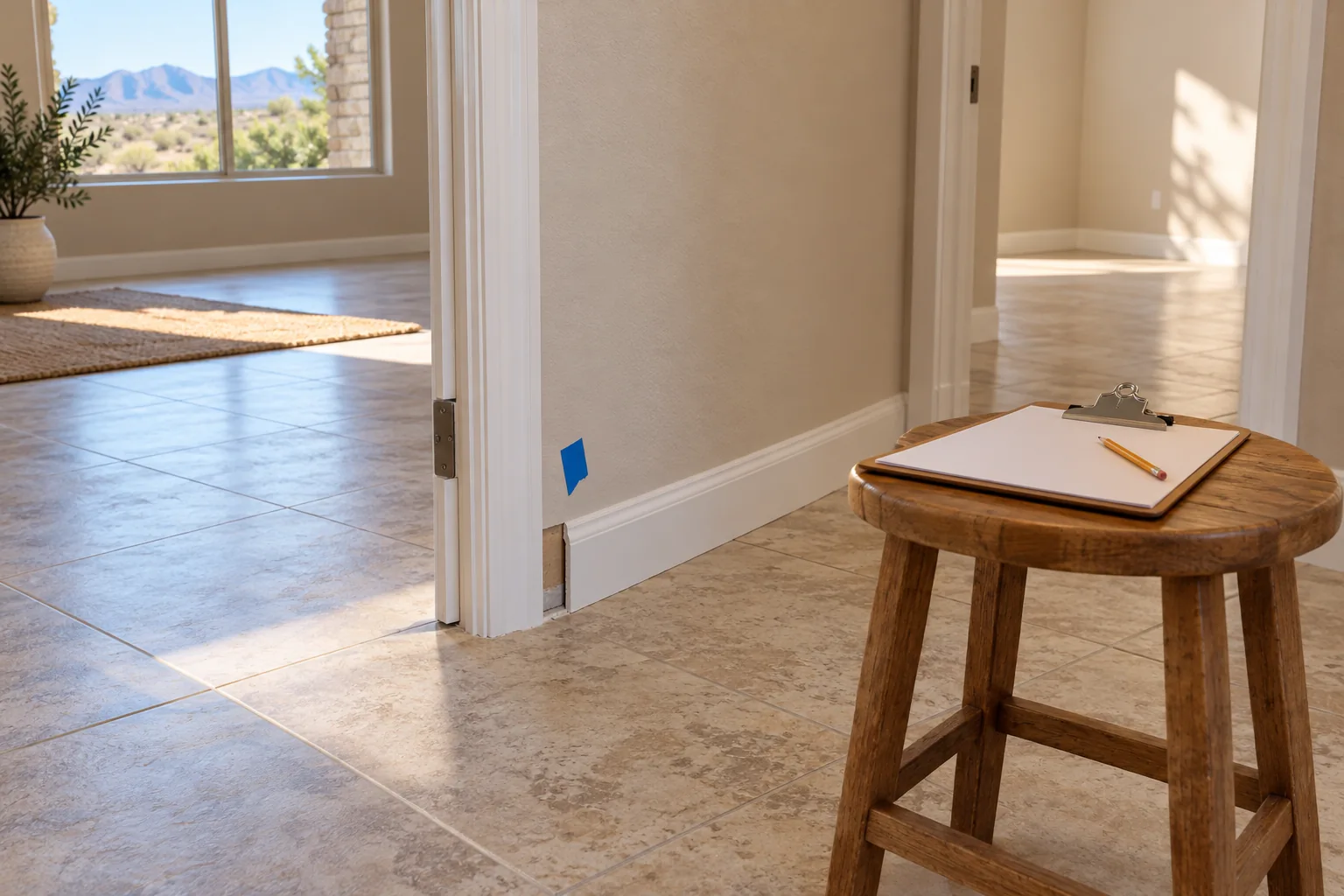
After repairs to a Nevada home, make a dated list of visible unfinished items before treating the repair file as complete. For each item, identify the room, the relevant contract or change-order line, a photo and the next question for the contractor. A list of remaining work is often called a punch list. It helps explain the condition you observed; it does not prove insurance coverage or certify the quality of hidden work.
The Nevada State Contractors Board recommends a final walkthrough, a written punch list and written repair agreements. Its Working With Contractors guidance is linked below. The filing method here is an optional way to organize that review for a property claim.
1. Bring the agreed scope into the room
Use the signed repair contract and later written change orders as your reference. Keep the insurer’s estimate separately identified: it may describe a different scope or version. Mark the date of each document so a deleted or revised line does not reappear as an unexplained demand.
Move through accessible rooms in a consistent order. Describe the exact location, such as the hallway side of the bedroom doorway, instead of writing only “trim unfinished.” Do not enter unsafe areas, climb onto a roof or open electrical or concealed building systems for this checklist. Record an inaccessible item as not observed and ask the appropriate qualified professional how it should be assessed.
2. Make observations easy to find again
Give each item a short reference, such as HALL-01. Take one wider photo for location and one closer photo for the visible concern when safe. Preserve the originals with their dates; use copies for arrows or labels. Keep private papers, faces and account details out of shared pictures.
A simple entry can contain:
- Item reference, room and precise location; walkthrough date and who attended.
- Contract or change-order reference, with the version date.
- What you actually observed and the corresponding photo filenames.
- Question sent to the contractor, response received and any agreed return date.
- Status: awaiting response, work planned, contractor reports complete, or checked again.
3. Separate a response from a completed repair
Write observations in plain terms. “Baseboard section absent beside doorway” is more useful than a broad accusation about workmanship. If the contractor says an item was excluded or replaced by another solution, save that explanation and identify the document it refers to. Leave a disputed point visible in the record.
Fictional example: HALL-01 records a missing trim section on Monday. The contractor replies that installation is planned for Thursday. Keep the entry open until a later observation can be recorded. If a Friday photo shows the installed section, add that date and photo reference rather than erasing Monday’s entry. This is an invented filing example, not an M&T client result.
When completion is reported but you have not returned to the property, record who reported it and when. Do not describe it as personally checked. A return visit or photo may document appearance; it is not a substitute for any required professional assessment or official inspection.
4. Connect the list to the claim question
Send the contractor the relevant list and request a written response to each open item. Keep the response with the same item references. If the insurer needs repair-completion evidence, ask which documents it requires and provide a clear status date. Do not label the entire repair complete while your own record still identifies unresolved work.
Keep a contractor’s scope dispute, an insurer’s coverage decision and a request for completion evidence separately identified. The NAIC advises retaining claim paperwork and asking for a written denial if part of a claim is denied. A punch list alone does not establish an additional insurance payment.
Our Nevada estimate-comparison and change-order guides, linked below, help trace earlier scope versions. Keep the walkthrough record as the later condition check. This organization method does not replace your contract, policy duties or applicable deadlines; ask promptly about any unresolved requirement.
Frequently asked questions
Clear answers, without promises.
Is a punch list proof that an insurer owes more?+
No. It records unfinished items and questions. Coverage, policy terms and the facts of the loss determine the insurance question; a contractor disagreement needs its own explanation.
Should I delete an item after it is fixed?+
Keep the original entry and add a dated follow-up with the relevant photo or report. That preserves the sequence without suggesting the earlier observation was wrong.
Can I mark hidden work as satisfactory after a walkthrough?+
A visual walkthrough cannot establish the condition of work you cannot see. Mark it not observed and retain the applicable professional reports or inspection records separately.
Official sources
Sources used for this guide.
- Nevada State Contractors Board — Working With Contractors
- NAIC — Settling a homeowners insurance claim
- Related: Compare Nevada repair estimates
- Related: Nevada repair change-order file
Last editorial review: . External pages may change.