
Published · Reviewed · M&T Adjusters
This article provides general educational information. It does not interpret any policy, provide legal or safety advice, or guarantee coverage, payment, or results. The applicable policy, endorsements, facts of the loss, and insurer process control each claim. For health, fire, electrical, structural, or contamination hazards, follow public-authority and qualified-professional instructions.
Ask about inspection before arranging removal
For a Nevada property claim, contact the insurer before disposing of damaged belongings and ask what it needs to inspect or document. Keep its response with your item list. A photograph, a cleanup invoice or a contractor’s recommendation does not by itself establish that the insurer has finished reviewing an item.
The Nevada Division of Insurance advises owners not to dispose of property until an insurance adjuster has reviewed it. Its claim guide is linked below. Do not treat this as an instruction to enter an unsafe area or handle hazardous material. If there is an immediate hazard, follow emergency or qualified professional instructions and notify the insurer promptly about what could not safely be retained.
1. Identify exactly what may leave
Give each item a stable inventory reference before arranging pickup. Record the description, quantity, location and observed condition. Separate what you can see from an opinion about repairability. “Drawer will not close” is an observation; “cannot be repaired” should identify who reached that conclusion and the supporting report.
The NAIC recommends listing damaged property and taking photos or video. Link those files to the same item reference. When safe, include an overall view and a close view of visible damage. Do not move a heavy or unstable item just to get a photograph. Our Nevada inventory guide explains how to document belongings when receipts are missing.
2. Request item-specific instructions
Send a short list of the items proposed for removal through the insurer’s confirmed claim channel. State whether an adjuster has seen them, whether a contractor recommends removal and whether any safety or access issue affects storage. Ask for written clarification rather than interpreting silence as approval.
- Does the insurer need an in-person inspection, additional photos or a service report?
- Which listed items have been reviewed, and which remain pending?
- Does it request that any item or part be retained, and how should a safety concern be handled?
- What documentation does it request for removal charges?
- Who should receive the final removal record?
3. Separate the different decisions
An inspection, a repairability assessment, disposal instructions and a coverage decision answer different questions. Record each separately. Permission or instructions to remove an item do not establish its covered value or promise reimbursement for hauling, storage or replacement. Ask the insurer how the relevant policy terms apply.
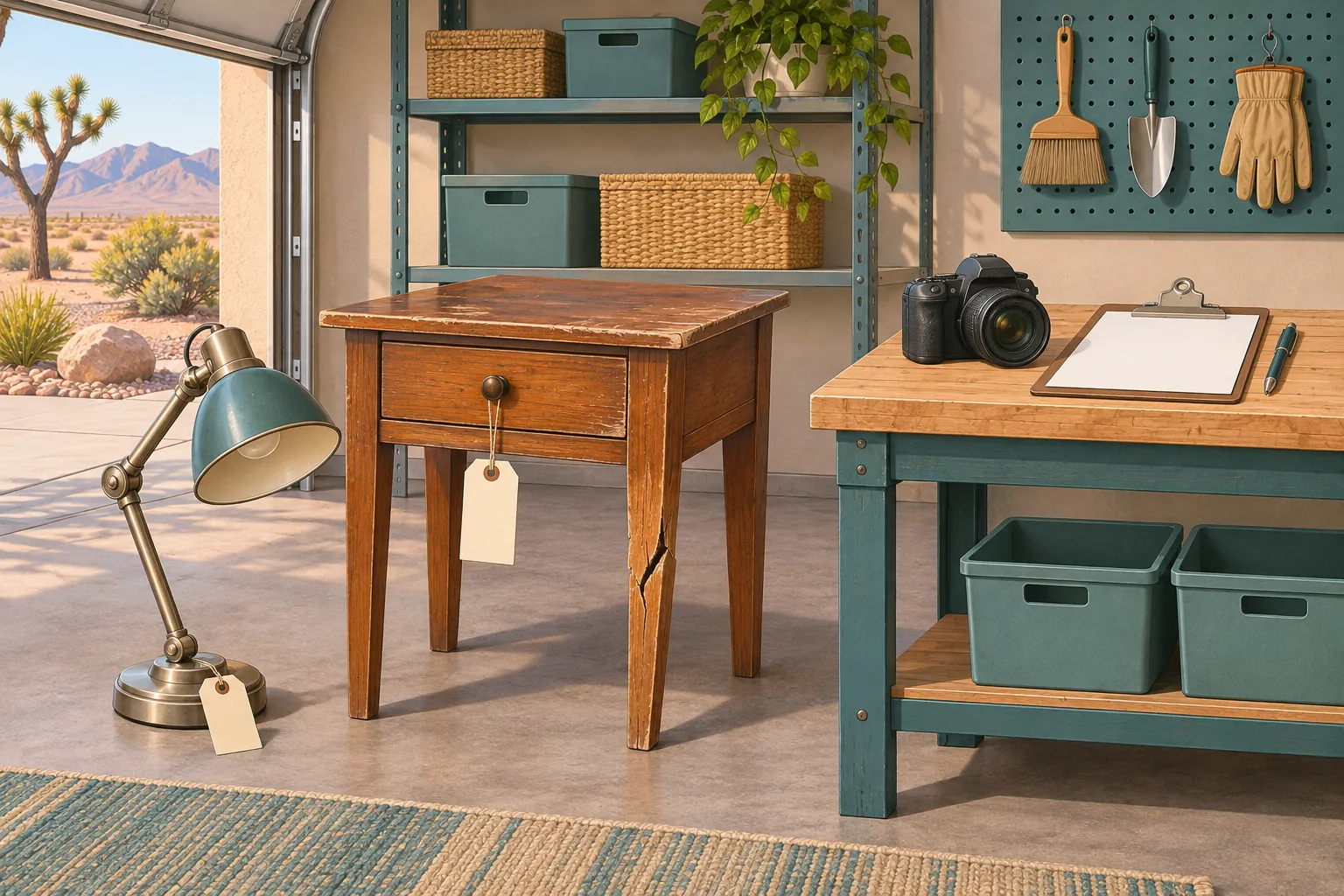
Fictional example: a damaged side table is item LR-04. A contractor recommends removal, but the insurer has requested more photographs. The owner records both statements and asks what is still needed before scheduling pickup. This example illustrates a documentation gap; it is not an M&T case, a safety assessment or a prediction of payment.
4. Make the pickup record match the inventory
When removal proceeds, record the date, service provider, items actually taken and available receipt or work order. If a pickup includes several items, ask for enough description to connect the charge to the list. Keep the original invoice and add your own cross-reference note separately; do not alter the provider’s document.
Distinguish disposal from moving property into storage, sending it for repair or returning it to your home. If an item remains elsewhere, record its location and custodian instead of marking it discarded. Our Nevada move-and-return guide covers that separate tracking task. Do not post claim references, home addresses or private invoices publicly.
5. Explain gaps honestly
If an item has already been discarded, tell the insurer when, by whom and why, to the extent you know. Preserve existing photos, earlier inventory entries, messages, receipts and any available contractor explanation. Ask what substitute evidence it will consider. Do not recreate a disposal authorization, backdate a note or describe a newly written account as a contemporaneous record.
Save the submitted package and its delivery confirmation. Keep unresolved questions visible rather than marking every item complete. These organizing steps help a reviewer follow what happened; coverage and payment remain dependent on the policy, the facts and the insurer’s assessment.
Frequently asked questions
Clear answers, without promises.
Do photos automatically replace an inspection?+
Do not assume so. Ask the insurer what it needs for the specific items and retain its answer.
Does approval to remove an item guarantee payment?+
No. Removal instructions, coverage, value and reimbursement of expenses are separate issues.
What if retaining the item is unsafe?+
Do not enter unsafe areas or handle hazardous material for documentation. Follow emergency or qualified professional instructions and promptly tell the insurer what happened and what evidence remains.
Official sources
Sources used for this guide.
- Nevada Division of Insurance — What to do after damage
- NAIC — Filing a homeowners claim
- Related: Nevada inventory without receipts
- Related: Nevada belongings moved and returned
Last editorial review: . External pages may change.