
Published · Reviewed · M&T Adjusters
This article provides general educational information. It does not interpret any policy, provide legal or safety advice, or guarantee coverage, payment, or results. The applicable policy, endorsements, facts of the loss, and insurer process control each claim. For health, fire, electrical, structural, or contamination hazards, follow public-authority and qualified-professional instructions.
Ask for context along with the photographs
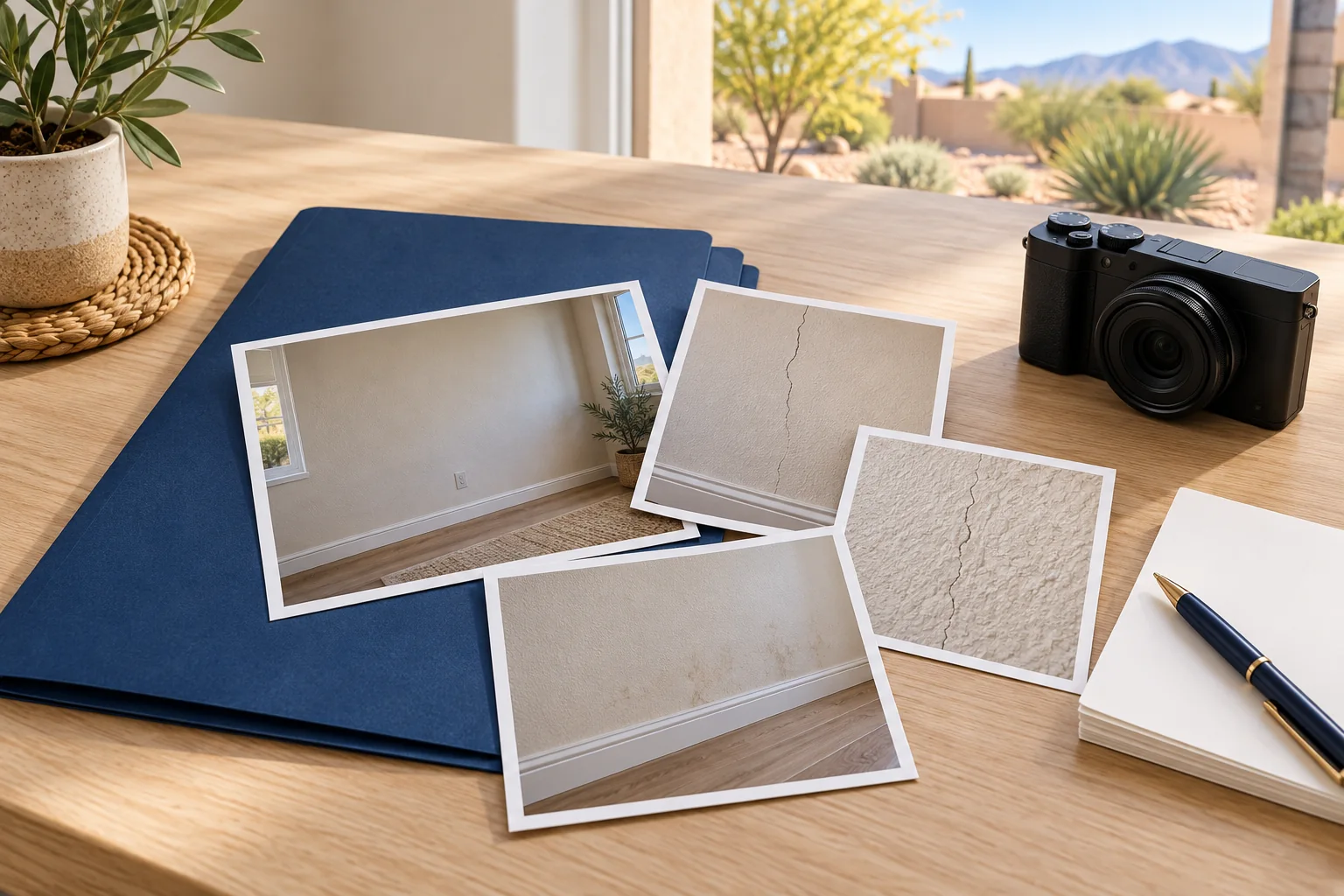
When a contractor sends photographs for your Nevada property claim, save the files as received and ask for a short explanation of where and when each group was taken. Keep the original filenames, identify the visit and separate the contractor’s observations from your own notes. A close-up alone may not establish which room it shows or what caused the condition.
The NAIC homeowners-claim guide, linked below, recommends documenting damage with photos and videos. The handoff method here is an optional organizing practice for Nevada owners, not a required claim form or a promise of coverage. It complements our photo-documentation guide by addressing pictures supplied by someone else.
1. Preserve the delivery before reorganizing it
Save the original email or message, its attachments and the date received in your private claim file. If the contractor uses a download link, ask how long it will remain available and obtain a copy you can retain. Confirm an unexpected link with the contractor through a known contact method before opening it.
Keep an unchanged received-files folder and use a separate working copy for captions or sorting. If all you received was a PDF contact sheet or compressed message images, label that limitation and ask whether the individual original files are available. Do not describe a screenshot as the original photograph.
- Who supplied the images and which visit they concern.
- Date received and the number of files or PDF pages.
- Original filenames and any accompanying photo list.
- Missing files, unreadable images or links awaiting clarification.
2. Connect each close-up to a location
Create a simple index with the original filename, room or exterior area, surface or component and the contractor’s description. Ask for a wider contextual view when a detail cannot be located. Use a consistent room name across the photo index, inspection report and repair estimate, while retaining the wording of each original document.
Fictional example: a contractor sends twelve images named IMG_001 through IMG_012. Two show a stained surface without a doorway or other landmark. Instead of labeling them both “kitchen ceiling,” ask the contractor which room each depicts. Record the answer and its date. If the location remains unknown, keep that uncertainty visible.
3. Separate capture dates from delivery dates
The day a file arrived is not necessarily the day the photograph was taken. Record a capture date only when supported by the provider’s information or available file details, and note the basis. A date printed on a report, a file’s modified date and a camera timestamp can mean different things. If they disagree, ask for clarification instead of selecting the date that fits your timeline.
Keep any contractor explanation beside the image reference. Describe what is visible without adding an unsupported diagnosis. A photograph of a stain does not by itself establish the source, duration or policy treatment of water damage. Preserve a qualified provider’s findings as a separate report, including any limits on what was inspected.
4. Send a readable, traceable selection
When providing photos to your insurer, ask which file formats and submission channel it accepts. Include the relevant index and enough context to identify the pictured area. Retain the exact set sent and the receipt or acknowledgment; our submission-record guide below covers that final step.
If you annotate a working copy with arrows or captions, label it as annotated and retain the untouched source. Do not digitally repair, remove damage or generate missing evidence. Share claim identifiers and property details only through the confirmed private channel, and avoid forwarding unrelated personal images.
Before closing the handoff, check that files open, filenames match the index and unresolved questions remain listed. Request a corrected caption or missing original without overwriting the first delivery. This process helps someone follow the evidence; it cannot determine coverage, replace an inspection or guarantee a claim result.
Frequently asked questions
Clear answers, without promises.
Can I use photos supplied only in a PDF?+
Keep the PDF as received and identify its page numbers. Ask whether individual files are available when detail or image context is insufficient.
Should I rename every original file?+
Keep the received files unchanged. Use an index or separate working copies to add helpful labels without losing the original references.
Does the photo delivery date prove the damage date?+
No. Distinguish receipt, capture and observation dates, and explain the source of each. Mark an unknown date as unknown.
Official sources
Sources used for this guide.
- NAIC — Filing a homeowners claim
- Related: Nevada damage-photo documentation
- Related: Nevada document submission records
Last editorial review: . External pages may change.