Published · Reviewed · M&T Adjusters
This article provides general educational information. It does not interpret any policy, provide legal or safety advice, or guarantee coverage, payment, or results. The applicable policy, endorsements, facts of the loss, and insurer process control each claim. For health, fire, electrical, structural, or contamination hazards, follow public-authority and qualified-professional instructions.
Give each appliance its own service record
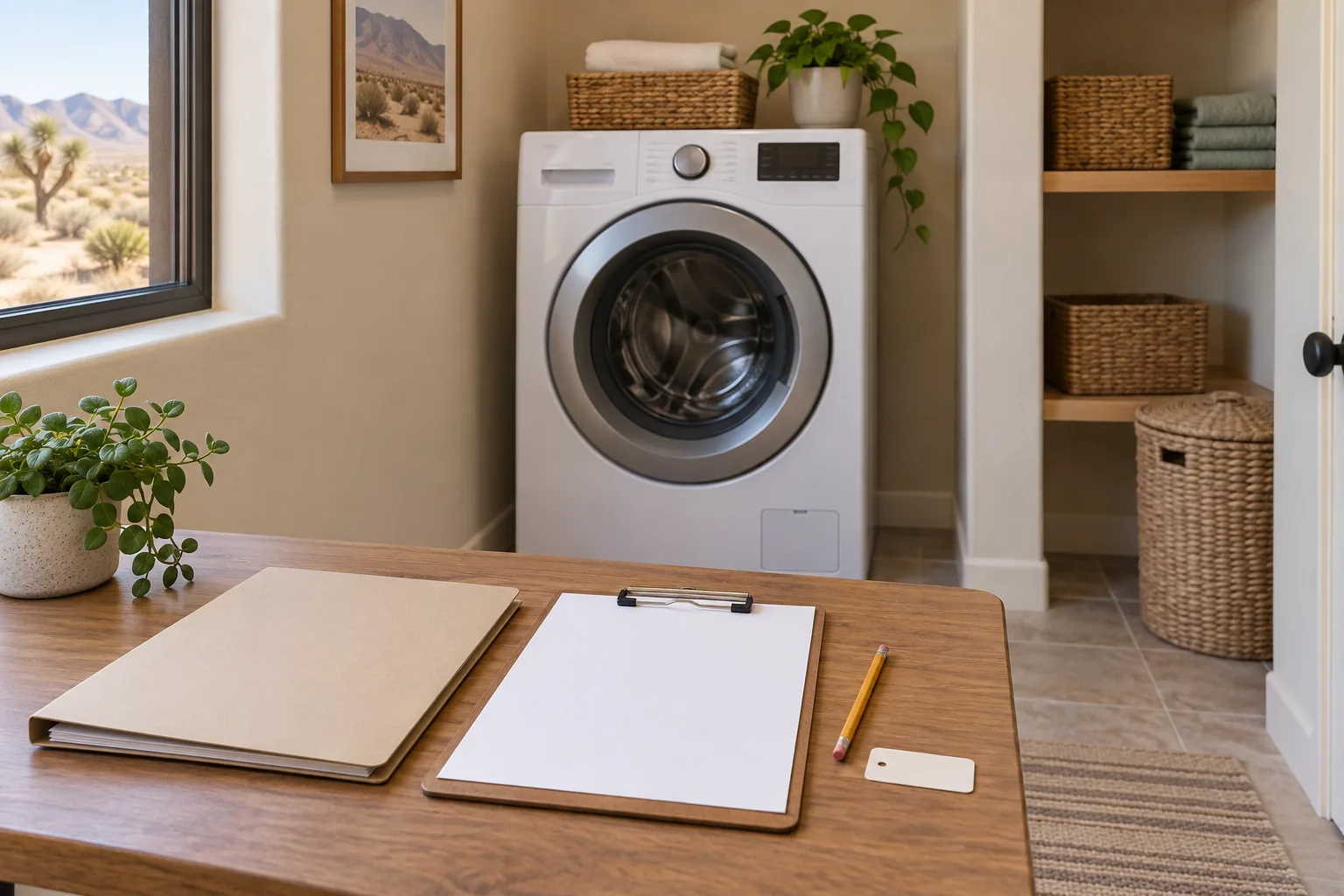
After property damage at a Nevada home, keep the appliance identification, your observations, the technician’s report and any proposed work together. The useful question is not simply “Was there a service call?” It is “What did this visit establish about this particular unit, and what still needs an answer?”
The Nevada Division of Insurance’s claim guide, linked below, recommends damage photographs, repair receipts and identifying details such as brand and model. This article adds an optional way to organize appliance-service records. It is not a diagnostic checklist, a required insurer form or a promise that a repair or replacement is covered.
1. Document safely before the appointment
Do not switch on potentially water-damaged equipment to demonstrate a problem. The Electrical Safety Foundation’s guidance, linked below, calls for qualified electrical evaluation and warns that restoring power without proper evaluation can cause serious harm. Follow the responsible authorities and qualified professionals; paperwork never takes priority over safety.
From existing records or a safely accessible label, identify the appliance’s room, brand, model and serial number. Ask the technician to document an inaccessible label rather than moving a heavy appliance or opening a panel yourself. Keep an unknown number marked unknown.
- Give the unit a stable file reference, such as “laundry appliance A.”
- Keep available purchase records, prior service records and original photographs.
- Write what you observed and when, identifying approximate dates as approximate.
2. Clarify what the visit will cover
Before the appointment, ask the service company whether the proposed visit is an inspection, a diagnosis, a repair estimate or authorized repair work. Request a written description of the proposed service and charges. Ask your insurer separately whether it needs an inspection opportunity or particular documentation. A booked appointment does not itself approve an insurance expense.
Give the technician a factual account. “I noticed water near the base on Tuesday” is an observation; “the storm destroyed the motor” is a technical conclusion unless supported by an appropriate evaluation. Include relevant earlier symptoms or repairs without rewriting the history to fit a preferred explanation.
3. Read the report for findings and limits
When the report arrives, confirm that it identifies the correct unit and visit date. Look for a clear distinction between information you supplied, conditions the technician observed, tests actually performed and the technician’s conclusions. If the report only says “replace,” ask the author to explain the basis and any limits of the evaluation.
Record an unanswered question as open. A report may document only a visual inspection, or it may recommend further evaluation before a conclusion. Do not describe tests as completed when they were merely proposed. Keep the original report and request a dated clarification from its author instead of editing the findings yourself.
- Does the report identify which appliance was examined?
- Does it explain the work performed and any evaluation that could not be completed?
- Does a repair or replacement recommendation include its stated reason?
4. Match the proposed work to the same unit
Keep a repair estimate beside the report and compare their appliance references. Ask about unexplained differences in model number, proposed parts, labor or scope. A replacement quotation, a diagnosis and an invoice answer different questions; preserve each document’s purpose and date.
Fictional example: a visit report identifies a washer but says the evaluation is incomplete. A separate quotation offers a new washer. Save both and ask what further evaluation is needed. Do not summarize the quotation as proof that the original unit cannot be repaired. This example is not an M&T case and does not decide coverage or repairability.
5. Close the document trail without deciding coverage
Ask the insurer what additional records it needs and retain its written response. Nevada DOI advises waiting for an adjuster’s review before disposing of damaged property. If a safety direction requires earlier removal, follow it, notify the insurer promptly and retain the direction and available documentation when safe. Do not retain hazardous equipment merely for evidence.
The NAIC’s homeowners-claim guidance, linked below, recommends retaining repair and purchase receipts. Connect any final invoice and payment record to the relevant report and estimate. Send these privately through a verified channel; keep account details and claim information out of public posts.
A technical report can explain an appliance’s condition. The policy and claim facts still govern insurance coverage. M&T’s Nevada photo and estimate-comparison guides below help organize related evidence; this file does not establish cause, authorize work or guarantee payment.
Frequently asked questions
Clear answers, without promises.
Does a service invoice prove the appliance must be replaced?+
No. An invoice may describe a visit or charge without establishing repairability. Read the actual findings and ask the report’s author to clarify the basis of any recommendation.
What if the serial number is wrong on the report?+
Ask the service company to confirm the unit examined and issue a dated correction. Keep the original and corrected versions together rather than silently replacing the record.
Should I run a wet appliance to record a video?+
No. Do not energize potentially water-damaged equipment to create evidence. Follow qualified electrical evaluation and safety instructions; document what is safely available.
Official sources
Sources used for this guide.
- Nevada DOI — Filing a property claim
- Electrical Safety Foundation — Water-damaged electrical equipment
- NAIC — Filing a homeowners claim
- Related: Nevada property-claim photo documentation
- Related: Compare Nevada repair estimates
Last editorial review: . External pages may change.